
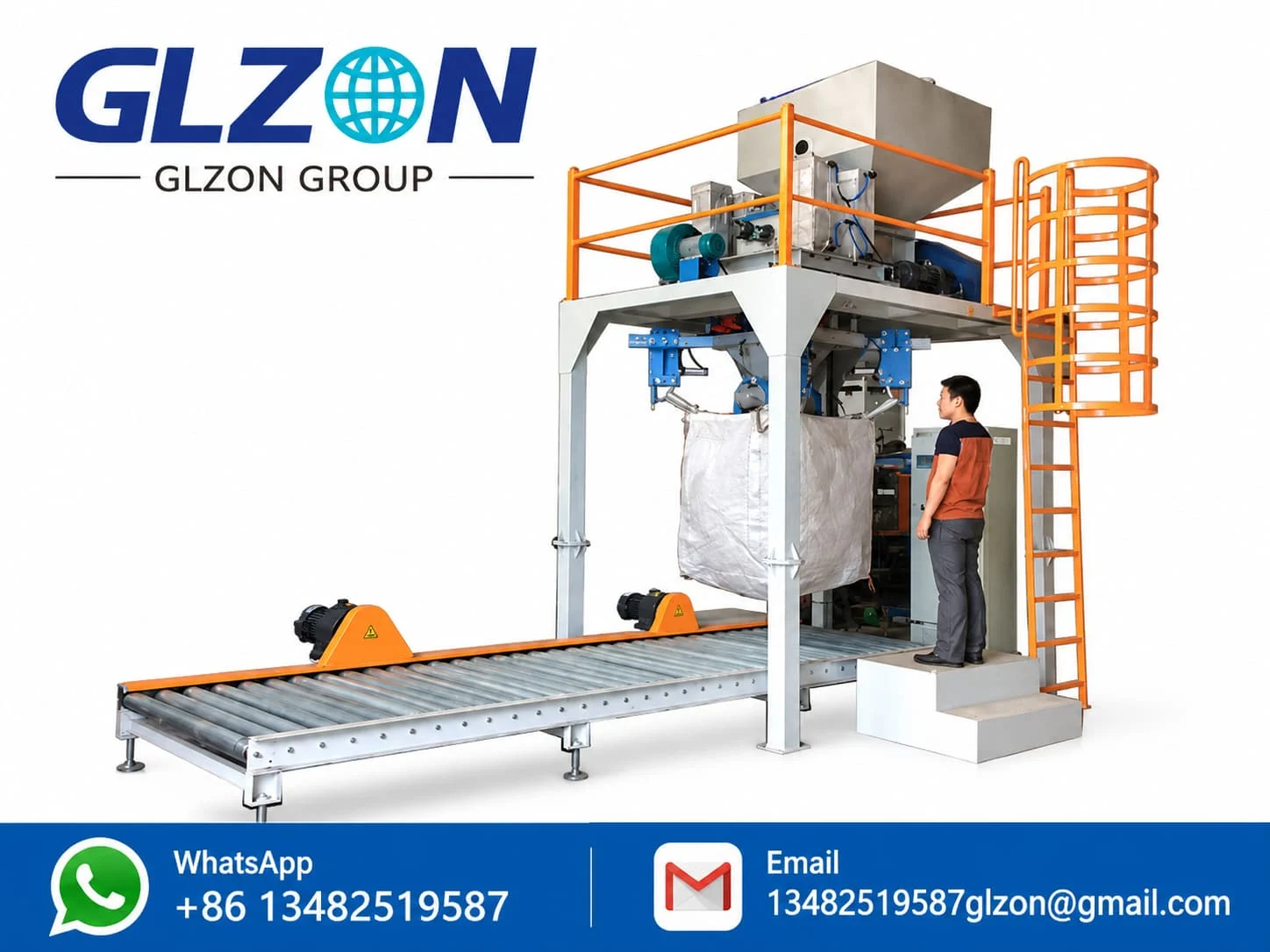
Bulk Bag Filling Machine for FIBC, Super Sack & Jumbo Bags
A bulk bag filling machine helps manufacturers weigh and pack large amounts of powder or granules into FIBC bags, super sacks, jumbo bags, big bags, and ton bags. The system improves filling accuracy and reduces manual work. Therefore, it is widely used in chemical, mineral, food, fertilizer, construction, and agricultural industries.
Shanghai GLZON provides customizable bulk bag filling equipment for different materials, bag sizes, filling weights, and production capacities. In addition, we can connect the filler with feeding, conveying, dust collection, and pallet handling equipment.
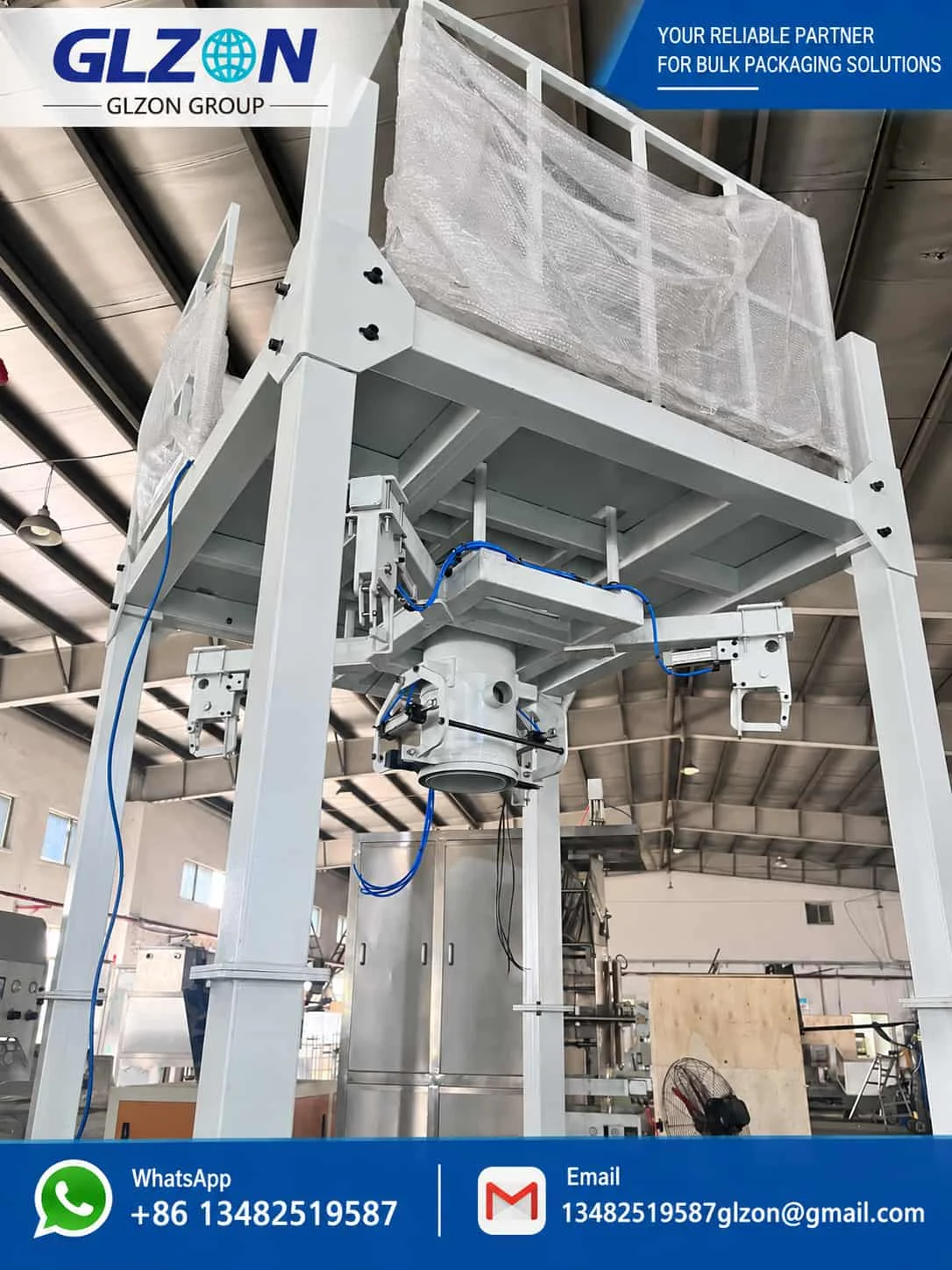
What Is a Bulk Bag Filling Machine?
A bulk bag filling machine fills large flexible industrial bags with a preset amount of material.
Depending on the country or industry, buyers may call these bags:
- FIBC bags
- Bulk bags
- Super sacks
- Jumbo bags
- Big bags
- Ton bags
- Dumpy bags
Although the names differ, they generally describe similar large-volume industrial bags.
The machine supports the bag, controls material flow, and checks the filling weight. As a result, manufacturers can achieve a more stable and efficient packaging process.
How Does a Bulk Bag Filling System Work?
The bulk bag filling system uses a simple filling process.
First, the operator places the empty bag under the filling station. Next, the operator attaches the bag loops to the support hooks and connects the bag inlet to the filling spout.
Then, the operator starts the filling cycle.
The feeding system transfers material into the bag. For example, the system may use a screw feeder, gravity feeder, belt feeder, or another suitable feeding device.
Meanwhile, load cells continuously measure the material weight.
The machine can fill quickly during the first stage. However, when the weight gets close to the target, the system reduces the feeding speed. Therefore, the machine can achieve better weighing control.
Finally, the system stops feeding when it reaches the preset weight.
Typical Filling Process
Material feeding → Bag positioning → Bag fixing → Fast filling → Fine filling → Weight checking → Filling stop → Bag removal
Main Components of a Bulk Bag Filling Station
A bulk bag filling station can include several components. The final design depends on the material and production requirements.
Filling Frame
The filling frame supports the FIBC bag during operation. Moreover, GLZON can customize the frame according to bag height, width, and filling requirements.
Filling Spout
The filling spout guides the material into the bag. In addition, a suitable connection helps control dust and material leakage.
Bulk Bag Filler Hopper
The bulk bag filler hopper stores material before filling. Therefore, it helps maintain a stable material supply.
Hopper size depends on the material, bulk density, and required filling speed.
Weighing System
Load cells continuously measure the filling weight. As a result, the control system can stop feeding when the bag reaches the target weight.
Feeding System
Different materials require different feeding methods.
Common options include:
- Screw feeding
- Gravity feeding
- Belt feeding
- Vibratory feeding
- Customized feeding systems
For example, a screw feeder can work well with many powders. In contrast, free-flowing granules may use gravity feeding.
PLC and HMI Control
The PLC controls the filling process, while the HMI allows the operator to adjust key parameters.
For example, the operator can set the target weight, fast filling value, and slow filling value.
Automatic vs Semi-Automatic Bulk Bag Filling Machines
Both semi-automatic and automatic systems can improve packaging efficiency. However, the right choice depends on production capacity, labor requirements, factory space, and budget.
| Item | Semi-Automatic | Automatic |
|---|---|---|
| Bag positioning | Operator assisted | Higher automation |
| Filling control | Automatic weighing | Automatic weighing |
| Material feeding | Automatic | Automatic |
| Bag handling | Manual or forklift | Conveyor options |
| Investment | Lower | Higher |
| Suitable for | Small to medium output | Higher output |
A semi-automatic system offers a practical solution for many factories. In addition, it requires a lower initial investment.
An automatic big bag filling machine, however, can connect with conveyors, feeding systems, pallet handling, and other equipment. Therefore, it works well for higher production requirements.
Materials Suitable for Bulk Bag Filling Equipment
A bulk bag filling machine can handle many powders and granules. However, manufacturers should select the feeding system according to the material properties.
Construction Materials
Common materials include:
- Cement
- Sand
- Dry mortar
- Gypsum
- Mineral powder
- Calcium carbonate
- Construction additives
Chemical Materials
The system can also handle:
- Chemical powders
- Fertilizer
- Industrial additives
- Plastic pellets
- Pigments
- Detergent powders
Food and Agricultural Materials
Depending on the required contact material, the machine can fill:
- Grain
- Sugar
- Starch
- Flour
- Seeds
- Feed ingredients
- Food powders
Minerals and Industrial Materials
Other applications include:
- Quartz powder
- Bentonite
- Graphite
- Mineral granules
- Ceramic powder
- Industrial raw materials
Therefore, customers should always provide their exact material information before machine selection.
FIBC Bulk Bag Filling Machine Specifications
GLZON can customize each FIBC bulk bag filling machine according to the required filling weight, material, bag size, and capacity.
| Specification | Typical Configuration |
|---|---|
| Bag type | FIBC / Bulk Bag / Jumbo Bag / Super Sack |
| Filling weight | Customized |
| Common range | 500–1000 kg or customized |
| Weighing method | Load-cell weighing |
| Feeding method | Screw / gravity / belt / customized |
| Control | PLC + HMI |
| Machine material | Carbon steel / SS304 / customized |
| Bag support | Adjustable support frame |
| Dust collection | Optional |
| Conveyor | Optional |
| Pallet handling | Optional |
| Filling accuracy | Based on material and configuration |
Because different materials flow differently, final specifications depend on the actual application.
How to Choose a Bulk Bag Filling Machine
Choosing the right bulk bag filling equipment requires several key details.
1. Material Type
First, tell us what material you need to fill.
For example, cement powder requires a different feeding solution from plastic pellets.
2. Bulk Density
Bulk density affects hopper size, filling speed, and machine configuration. Therefore, this information helps us select the correct feeding system.
3. Filling Weight
Customers may need 500 kg, 800 kg, 1000 kg, or another filling weight.
For example, a 1 ton bag filler usually handles around 1000 kg per bag.
4. Bag Dimensions
Bag width, height, inlet size, and lifting loop position affect the filling frame design. Therefore, we recommend providing a bag drawing or sample dimensions.
5. Required Capacity
Tell us how many bags you need to fill per hour. Then, we can select the correct feeding speed and automation level.
6. Filling Accuracy
Different applications require different levels of accuracy. As a result, we select the weighing and feeding system according to the target tolerance.
7. Dust Level
Fine powders can create dust during filling. Therefore, dusty applications may require a dust collection connection or enclosed filling design.
Optional Equipment for a Complete Bulk Bag Filling Line
A bulk bag filler can work as a stand-alone machine. However, factories can also integrate it into a complete packaging line.
Optional equipment includes:
- Screw conveyor
- Feeding hopper
- Belt conveyor
- Dust collection system
- Bag support system
- Vibration system
- Roller conveyor
- Pallet conveyor
- Palletizing equipment
- Wrapping machine
- Customized material feeding system
In addition, GLZON can design the equipment layout according to the customer’s available factory space.
Benefits of Bulk Bag Filling Equipment
A modern bulk bag filling machine can provide several production advantages:
- Accurate weighing
- Faster filling
- Less manual work
- Adjustable filling weight
- Stable packaging process
- Different bag size options
- Powder and granule compatibility
- Easy connection with feeding systems
- Dust-control options
- Customizable automation
Therefore, the machine can help factories improve both productivity and packaging consistency.
Bulk Bag Filling Machine vs Manual Filling
Manual filling may work for very low production volumes. However, it becomes less efficient as production increases.
Manual operations can cause inconsistent bag weights, higher labor demand, slower packaging, and more dust.
In contrast, a weighing-controlled bulk bag filling system measures every filling cycle. Therefore, manufacturers can improve weight consistency and reduce unnecessary manual work.
Moreover, factories can connect the machine with upstream and downstream equipment as production grows.
Why Choose GLZON Bulk Bag Filling Equipment?
Shanghai GLZON provides filling and packaging solutions for different industrial materials.
We can customize the system according to:
- Material characteristics
- Bulk density
- Filling weight
- Bag dimensions
- Required capacity
- Factory layout
- Feeding method
- Dust-control needs
- Automation requirements
In addition, customers can combine the filler with conveyors, feeding equipment, pallet handling, and wrapping equipment.
Therefore, instead of offering only one standard configuration, GLZON designs the bulk bag filling system around the actual production requirement.
Frequently Asked Questions
What is the difference between an FIBC bag, bulk bag, jumbo bag, and super sack?
These names generally describe large flexible bags for storing and transporting bulk materials. FIBC means Flexible Intermediate Bulk Container. However, the preferred name varies by country and industry.
What materials can a bulk bag filling machine handle?
The machine can handle many powders and granules. For example, applications include cement, sand, fertilizer, minerals, chemicals, food ingredients, grain, and plastic pellets.
Can the machine fill 1000 kg bags?
Yes. GLZON can configure the machine as a 1 ton bag filler for approximately 1000 kg per bag. In addition, we can customize other filling weights.
Can one machine handle different bag sizes?
Yes, depending on the bag dimensions. We can design an adjustable support frame for different bag sizes where suitable.
Can I adjust the filling weight?
Yes. The operator can set the target filling weight through the control system according to the machine configuration.
Can the machine connect to a screw conveyor?
Yes. A screw conveyor can feed powder into the filling machine. However, we may recommend another feeding system if it suits the material better.
Do I need a dust collection system?
It depends on the product. For example, cement and fine mineral powder can create significant dust. Therefore, we often recommend a dust collection connection for these materials.
Can GLZON customize the machine?
Yes. We can customize the machine according to material, filling weight, bag dimensions, capacity, feeding method, factory space, and automation requirements.
Request a Bulk Bag Filling Machine Solution
Are you looking for a bulk bag filling machine, FIBC filling machine, super sack filler, jumbo bag filling machine, or big bag filling station?
For a suitable solution, please send us:
- Material name
- Bulk density
- Filling weight per bag
- Bag dimensions
- Required bags per hour
- Required filling accuracy
- Available factory space
- Feeding method
- Required automation level
With this information, Shanghai GLZON can recommend a suitable bulk bag filling system for your production process.